Why Ticker Panic uses fictional stocks
A fictional stock market gives a trading game its own cast of characters. In Ticker Panic, company identity, price behavior, liquidity and headlines can work toward the same experience. You do not need to follow a real earnings calendar to understand the situation in front of you.
Companies become characters
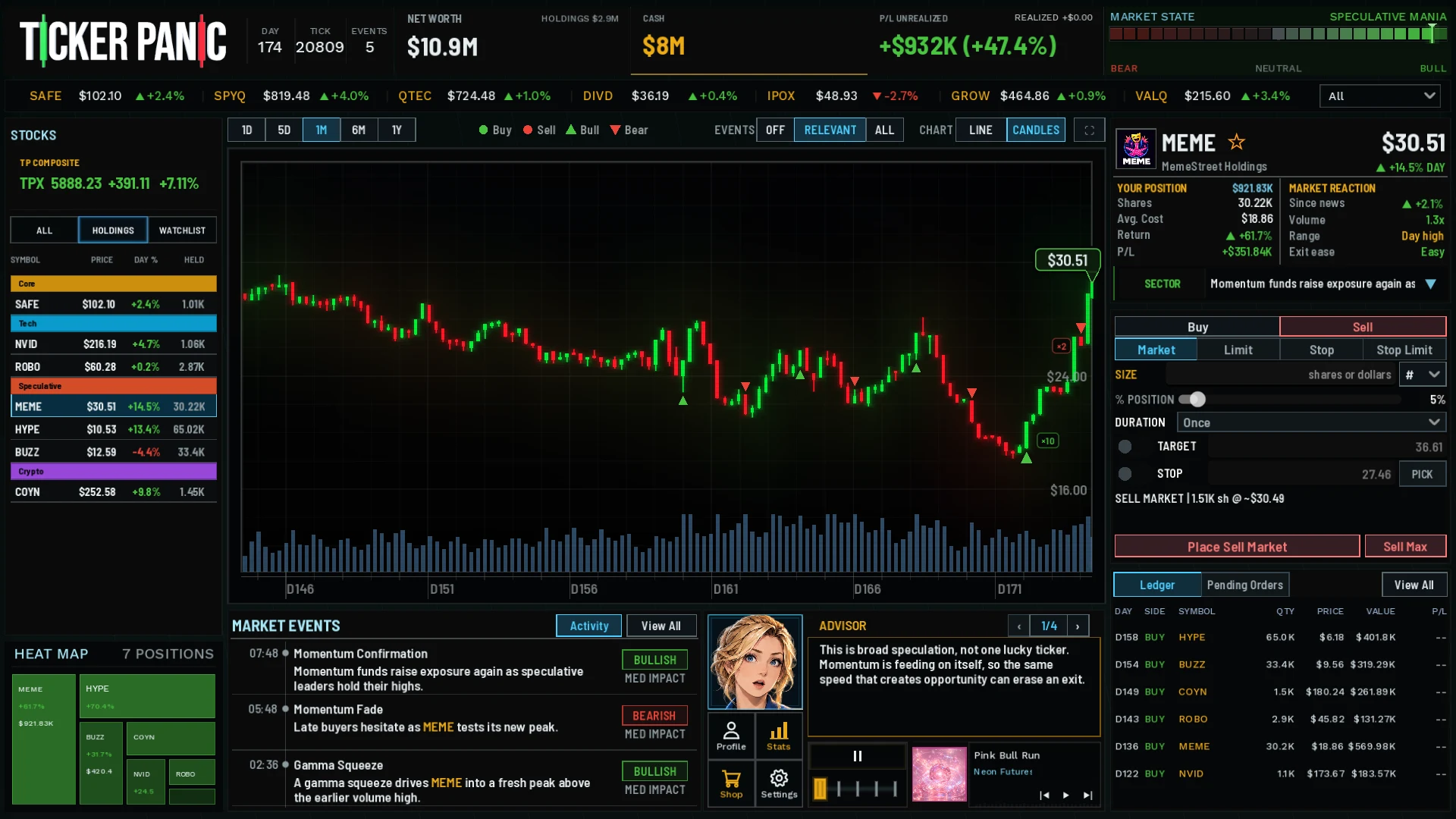
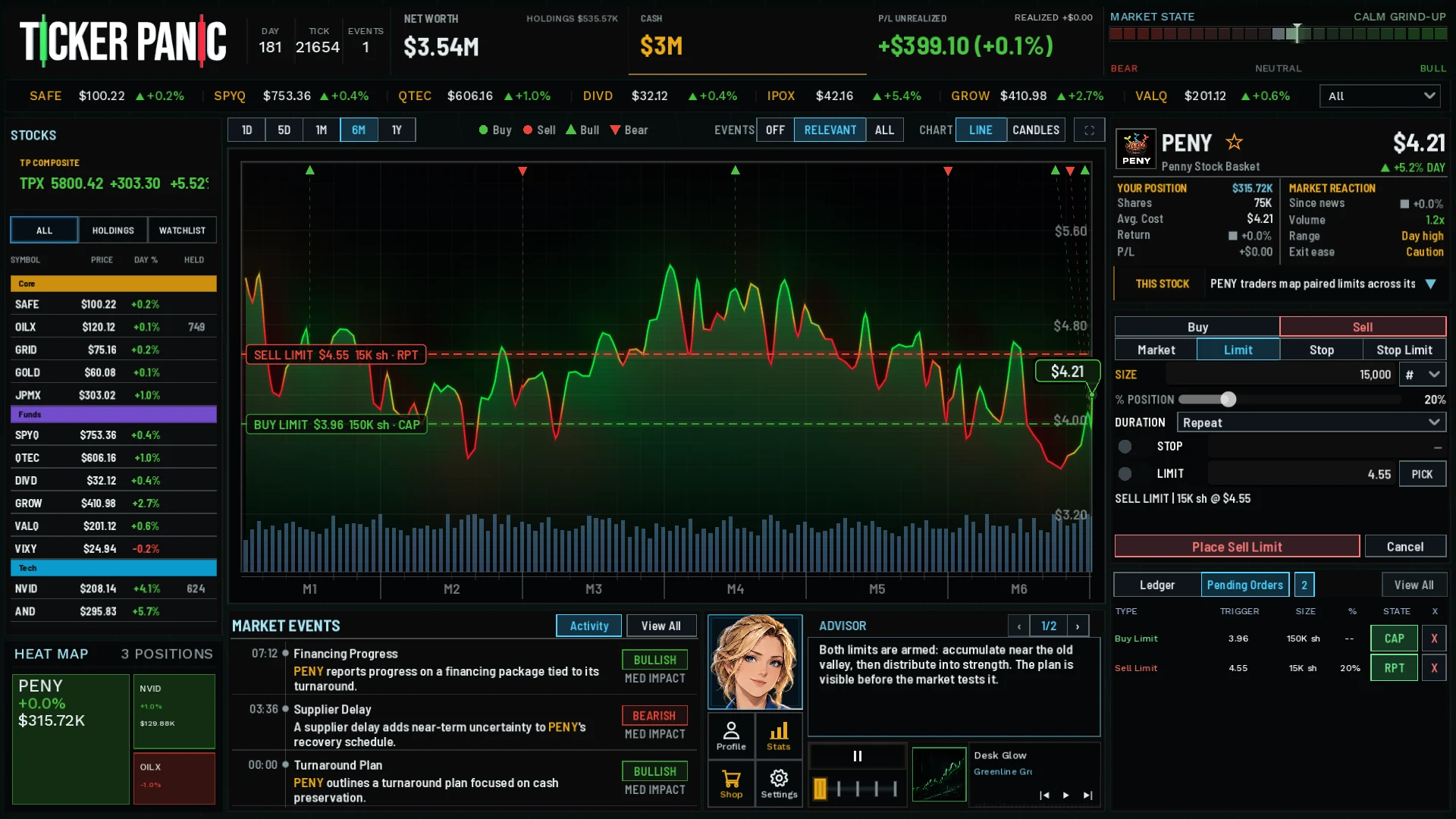
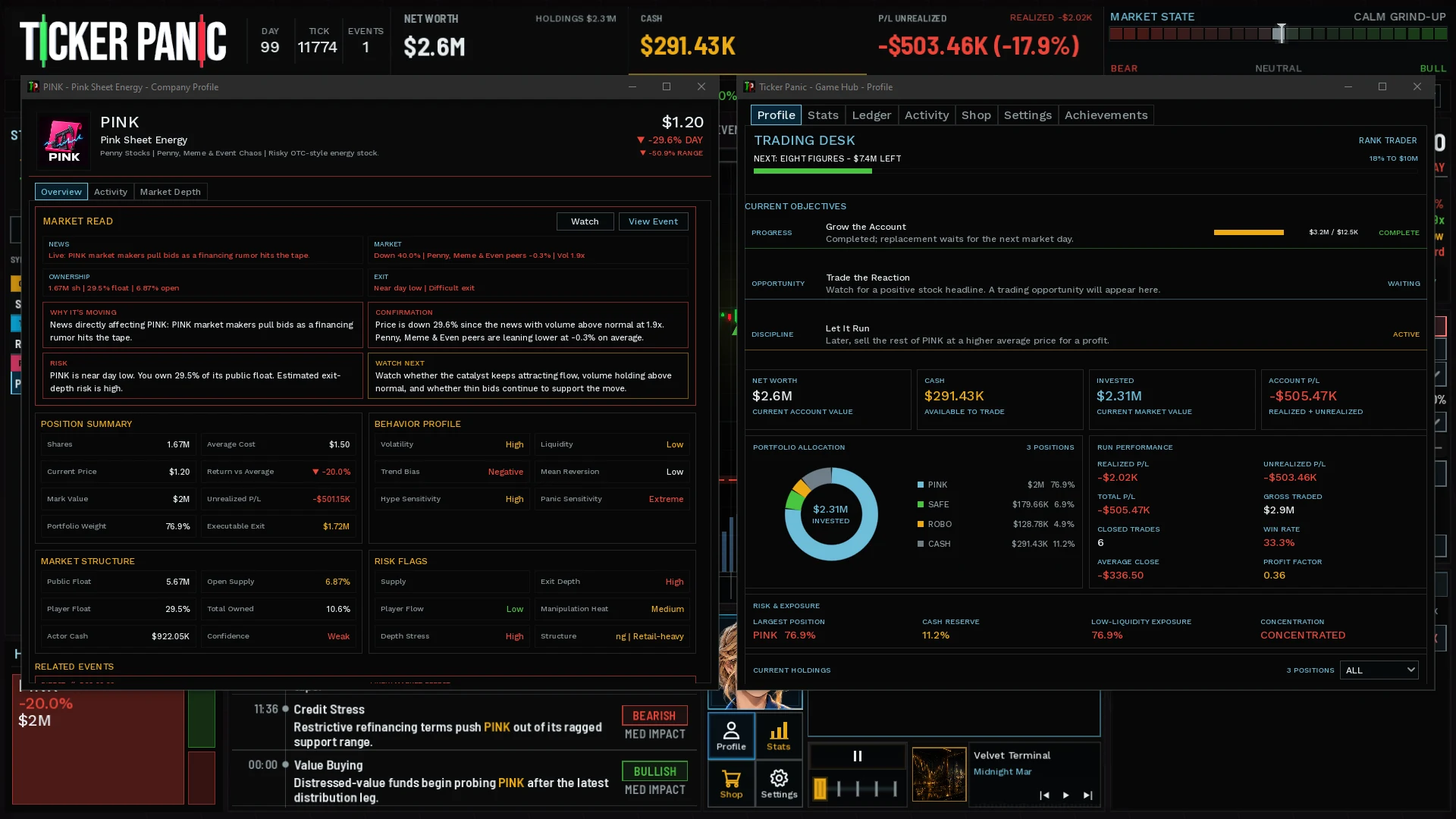
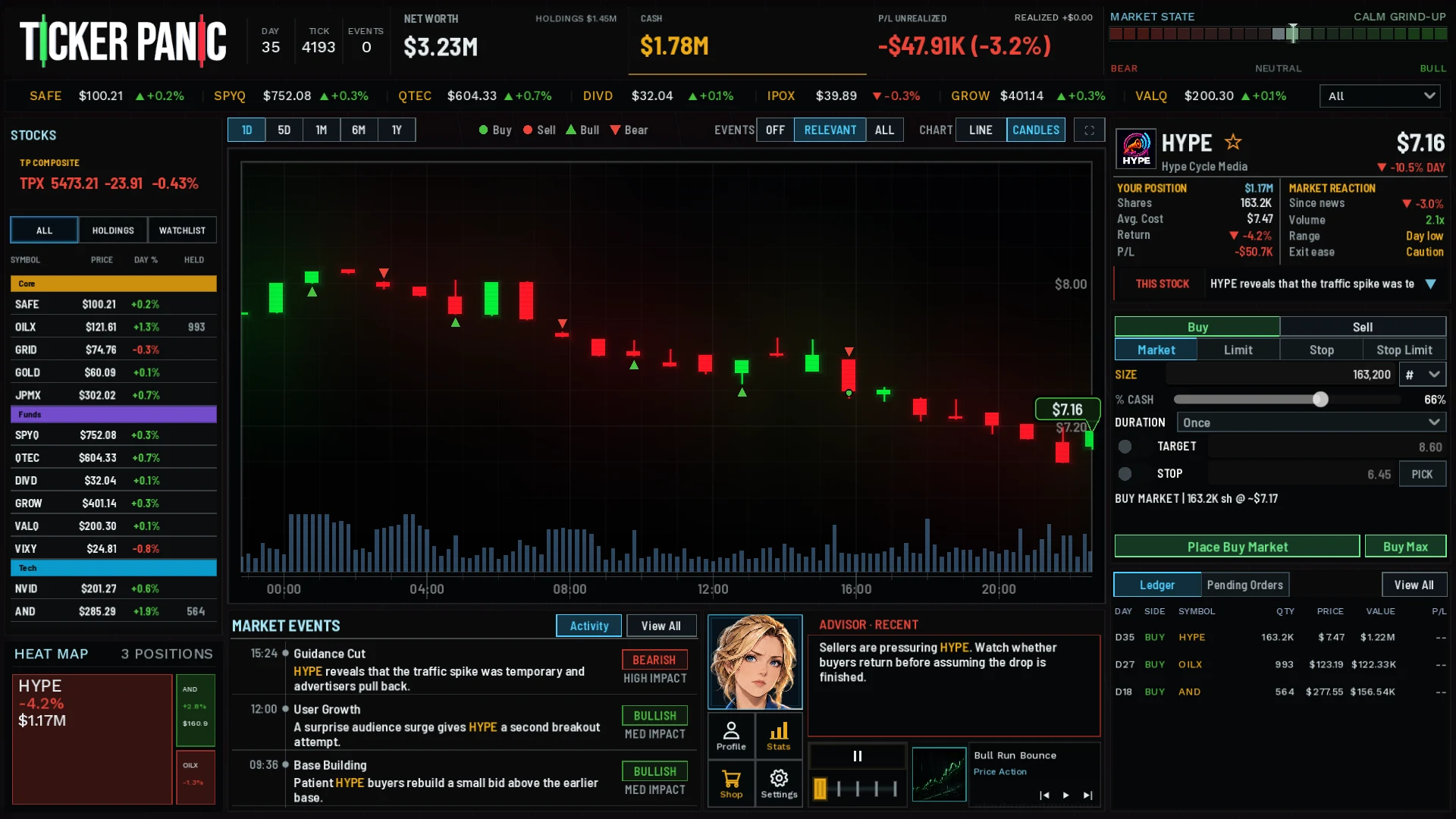
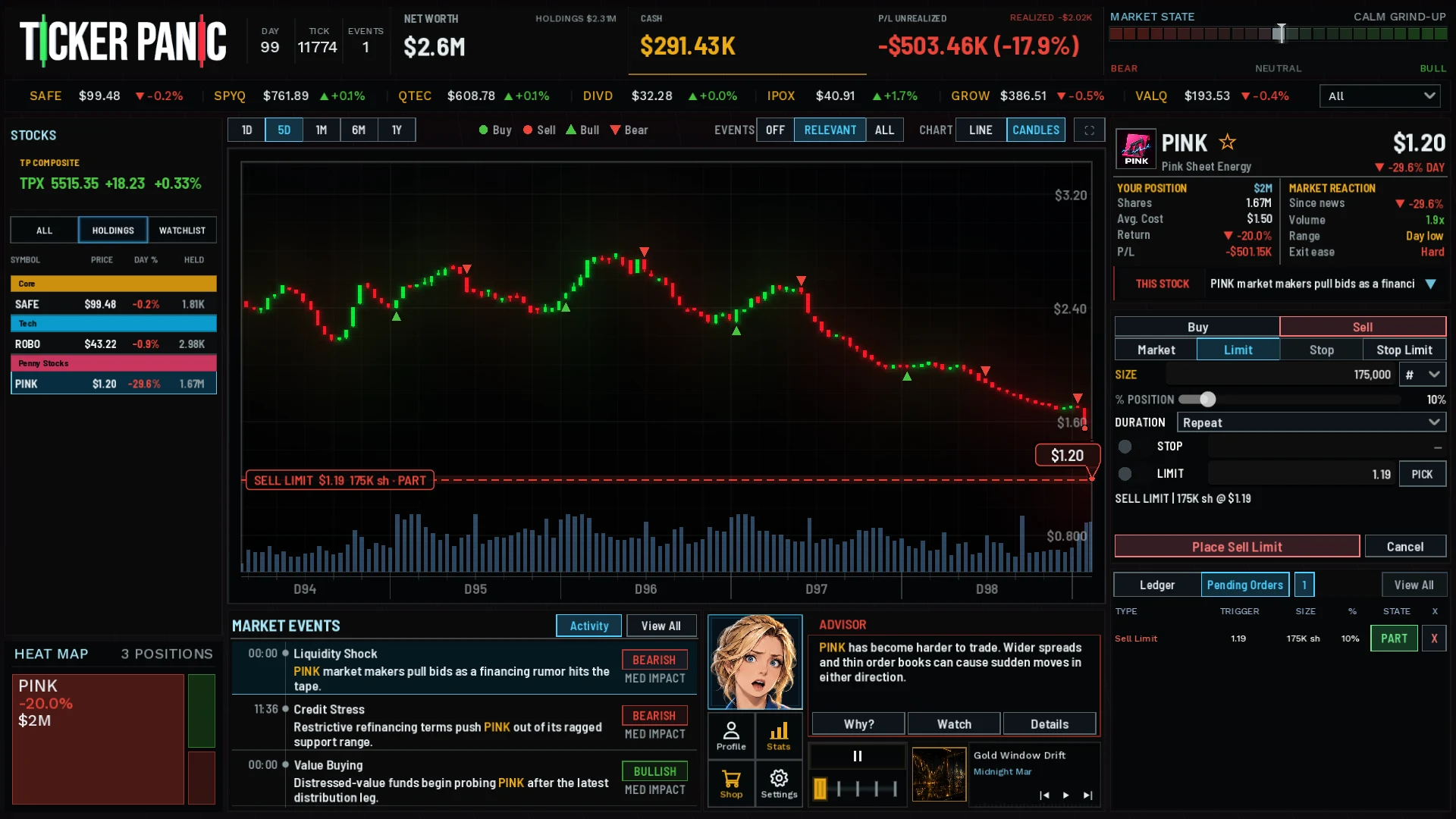
The captures include ROBO, MEME, PENY, PINK, HYPE and BOKO. Each offers a different context for a trade. Robotics announcements suggest a business story, a speculative ticker can attract a rush of attention, and a thinly traded asset makes position size especially important.
Fictional identities let those differences appear through names, profiles and authored news. Recognizing a stock becomes knowledge accumulated while playing, rather than a test of how much outside financial news you read.
Room to exaggerate the right things
A game can condense market drama into a session: enthusiasm builds, the price runs ahead, a catalyst changes the story and traders reconsider. Fictional companies let events be authored around understandable choices.
Comedy works best when the consequence is concrete. You might buy after exciting news and still watch the price fall. You might discover that the exit is harder than the entry because there are fewer willing buyers. The joke does not erase the trading problem.
Fictional does not mean consequence-free
The game tracks cash, quantities, fill prices, holdings and realized results. Finite liquidity and player price impact make the market resist your intention. A quoted price alone cannot tell you what a large trade will cost.
The newer reporting direction builds on that foundation with revenue, costs, profit and published reports. It is development work intended to give company stories more substance, rather than a promise to simulate every accounting feature.
Questions worth asking before a trade
Approach Ticker Panic as a strategy game: learn the instruments, observe signals and test decisions with fictional money. Its prices and companies belong to its own simulation.
What changed? How much are you committing? What would make you reconsider? A useful stock identity helps you ask those questions. The goal is to make decisions readable, sometimes funny and worth revisiting, without requiring homework about a real company's share price.