Market crashes and hype cycles in Ticker Panic
A market crash changes more than a chart's color. A reversal can affect several holdings at once, challenge your reason for entering and make cash more valuable. A hype cycle creates the opposite temptation: commit more because everything seems to be working.
A rally can hide concentration
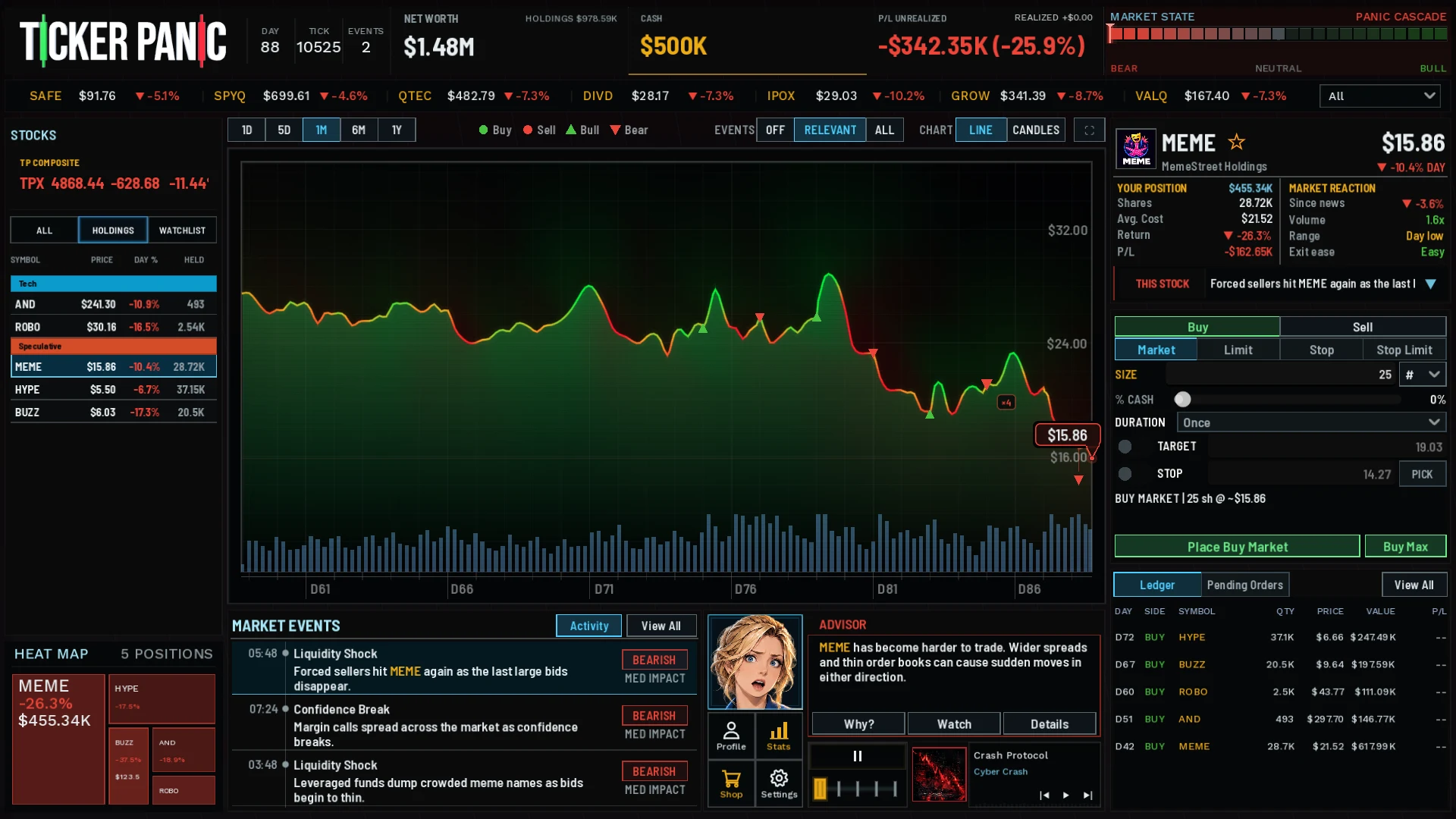
Several symbols can still expose a portfolio to similar market pressure. If multiple speculative holdings benefit from the same enthusiasm, counting positions alone will not explain the commitment you have made.
The MEME rally capture shows seven holdings in a rising market. The heat map makes the whole portfolio visible, while the chart focuses on one company. Both views matter: a good-looking trade can belong to an account that has become heavily exposed.
What a reversal asks you to reconsider
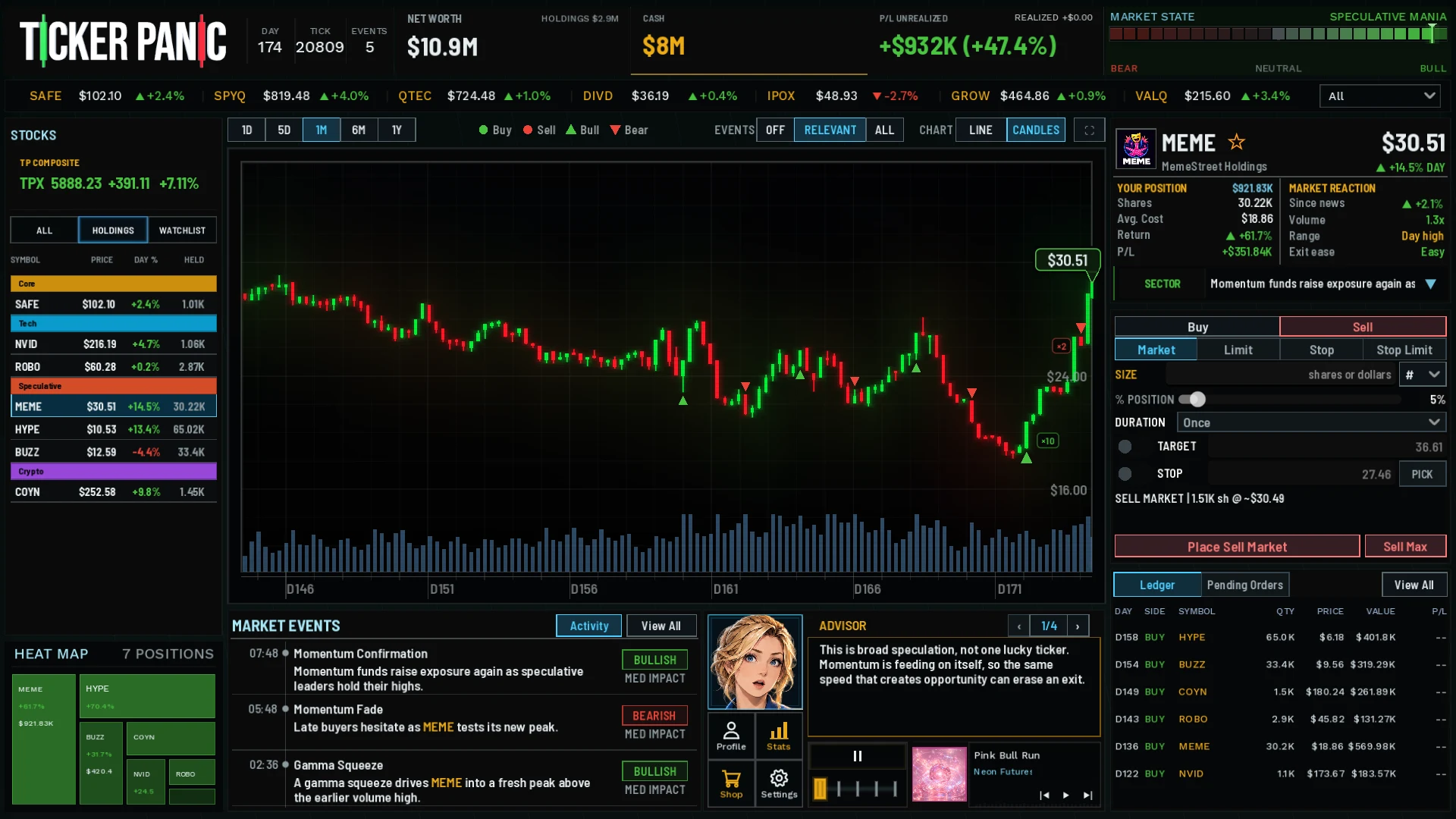
Separate three questions: has the company story changed, has broad sentiment changed, and can your order fill? They can lead to different decisions even when the chart is red in all three cases.
Market Events and the Advisor help inspect what the game reports. They do not remove uncertainty. A bullish story can be followed by selling, and a recovery signal can appear before a position returns to your entry price.
Positive news can still lead to a loss
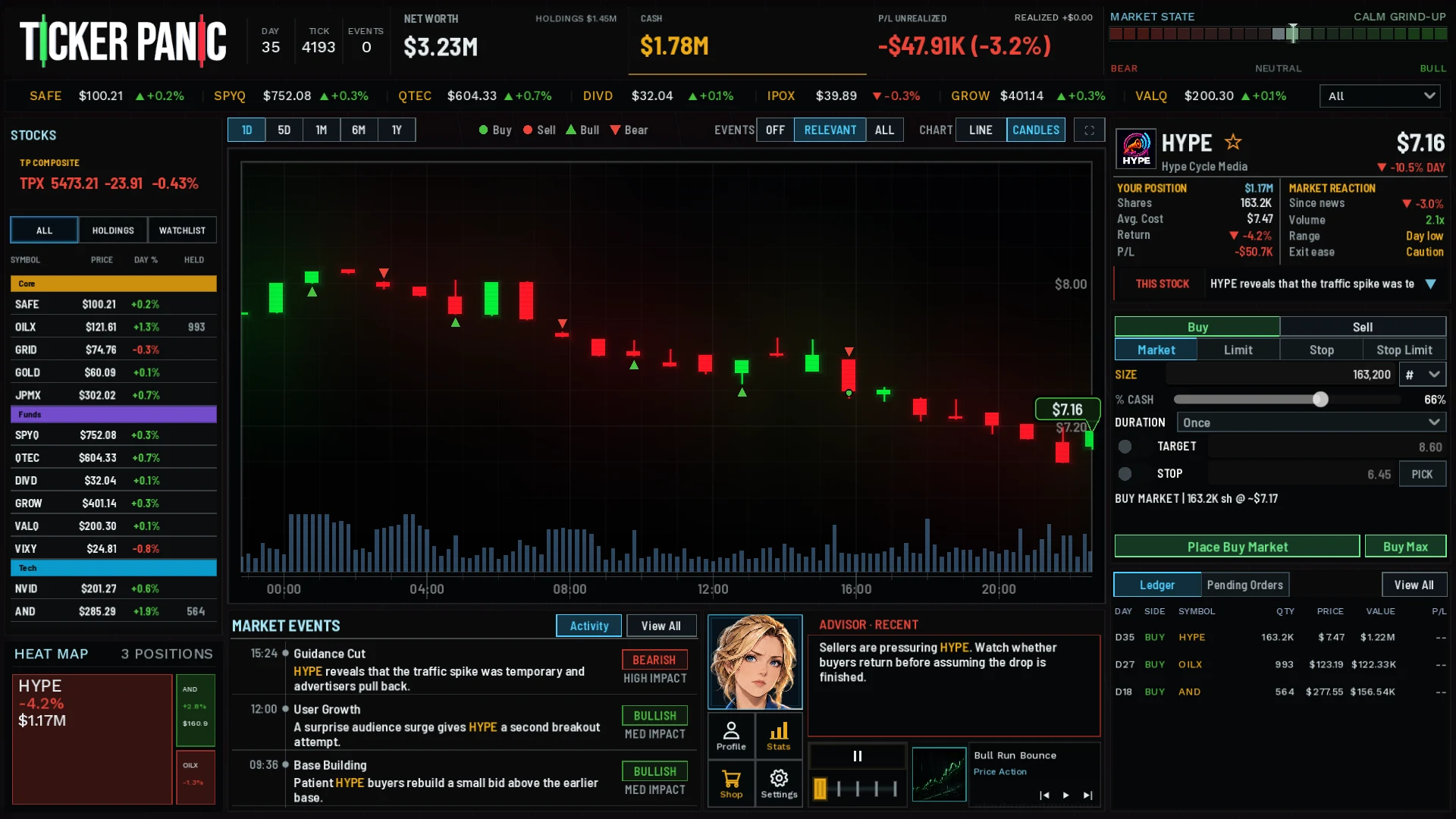
The HYPE capture follows a positive-news purchase with a real position loss. A headline is information about the scenario, not a guarantee that entering afterward will be profitable.
Compare your timing, the price already reached and subsequent movement. Ask whether your reason for trading remains supported, rather than whether an earlier news label said bullish. This makes a losing trade something you can review rather than just a red number.
An exit needs buyers
Liquidity trap is sometimes used loosely in game descriptions. Here the practical issue is constrained exit liquidity: there may not be enough bids to sell your whole position immediately at the displayed quote.
A partial fill leaves exposure. Inspect remaining quantity and order state before assuming a sale finished. Size and depth can turn a simple sell decision into a staged process, especially as your account grows.