Why large trades can move prices in Ticker Panic
A large portfolio changes how you trade. Ticker Panic has finite liquidity, so a bigger order does not simply produce a bigger version of a small fill. It can consume depth, change the quote or leave part of the intended transaction unfinished.
Price and depth answer different questions
The displayed price helps you understand where a stock is trading. Ask depth concerns shares offered to buyers; bid depth concerns demand from buyers when you want to sell. Available quantity matters alongside price.
The estimate can expose a constrained or market-moving order before execution. Read it together with size. Even when a stock looks affordable, the amount you want may be large relative to the market currently available.
The BOKO purchase
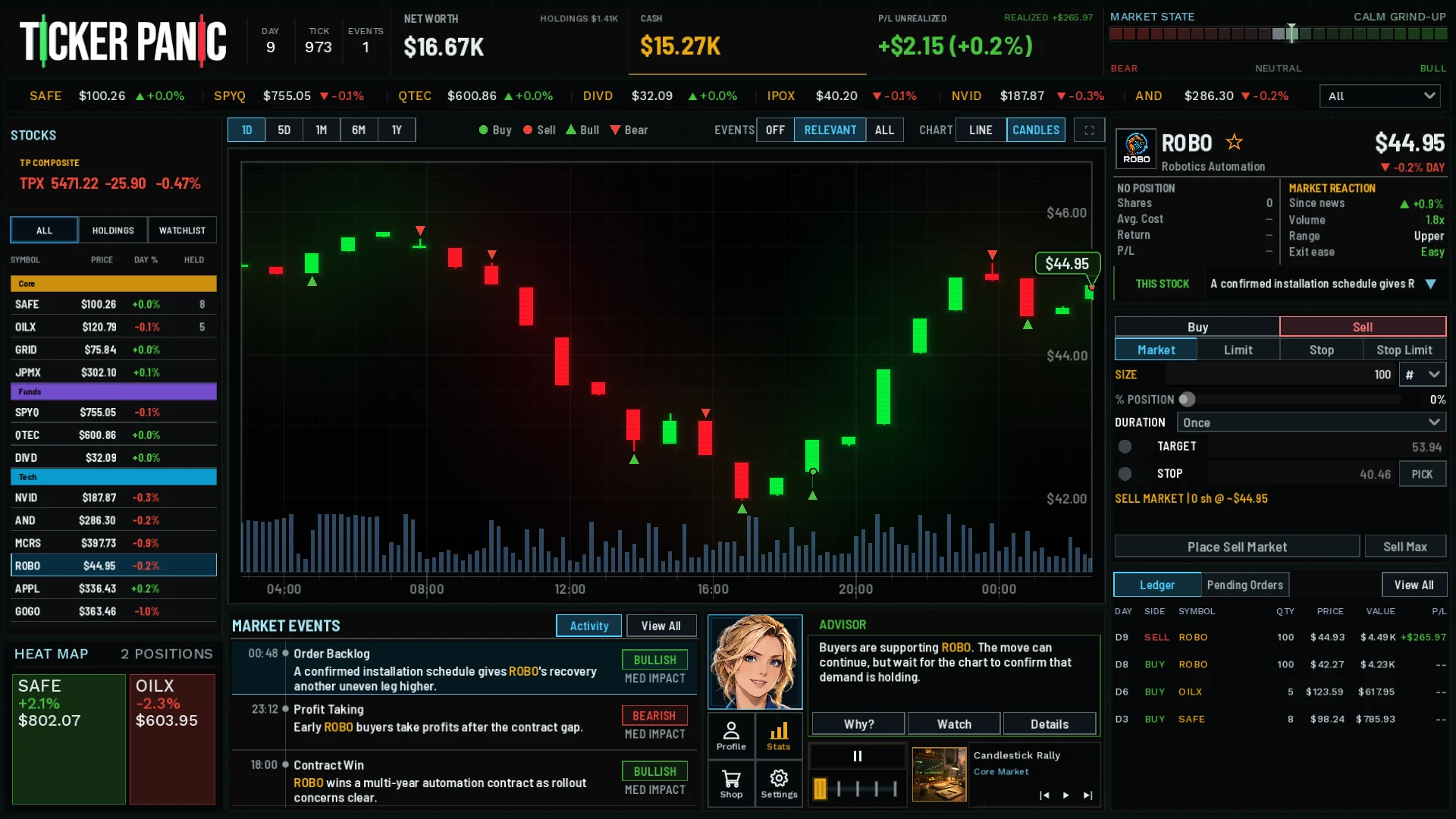
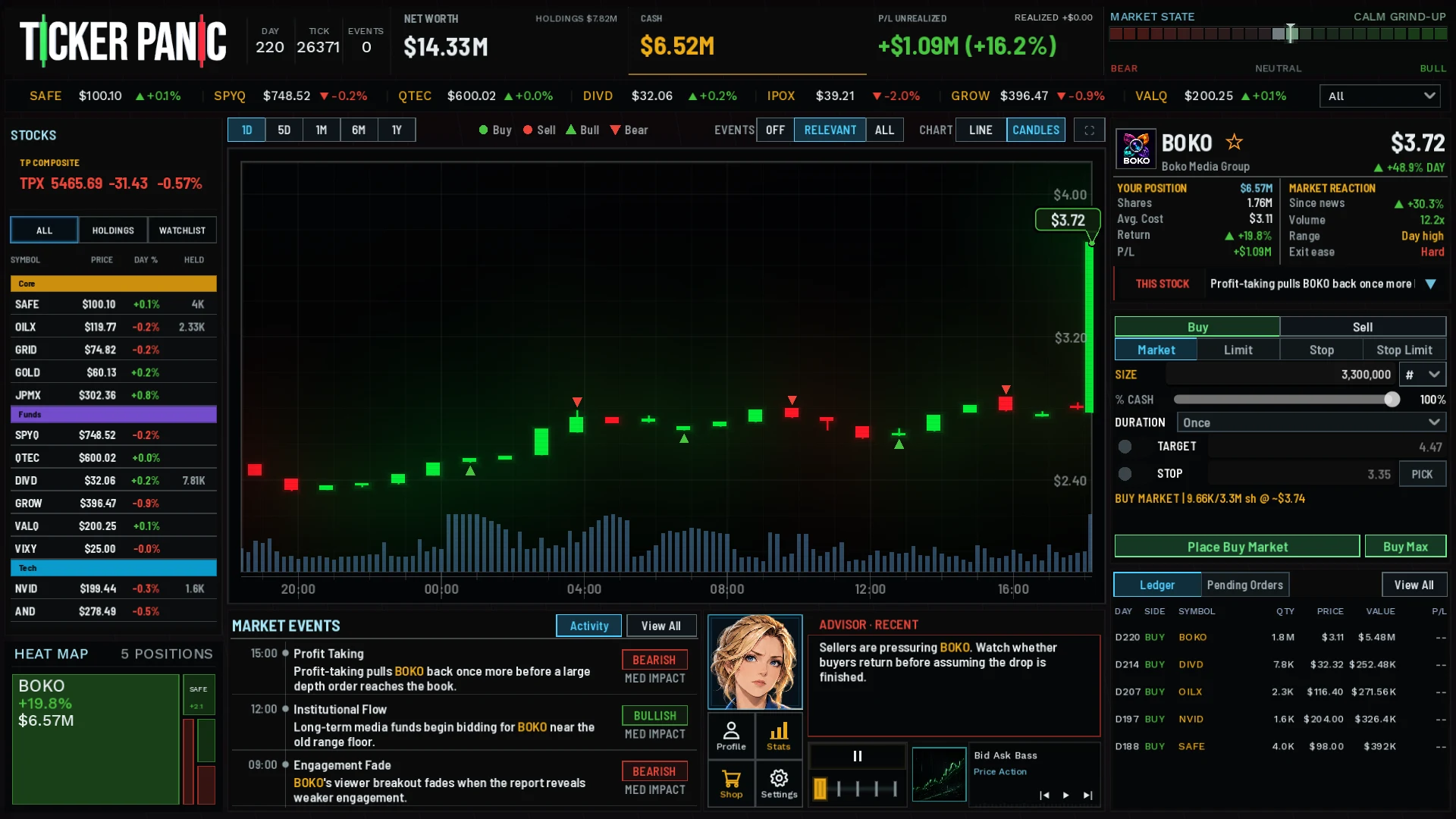
The BOKO capture records a native purchase worth $5.48M in a $14.33M account. Ledger, chart and ticket make that footprint visible. It is a different market interaction from the small ROBO transaction in the beginner guide.
A large buy does not create a permanently winning position. Moving the price at entry can make a later exit more difficult. Compare your new holding with the buyers available to take it off your hands, rather than assuming the displayed gain can all become cash immediately.
A partial exit leaves exposure
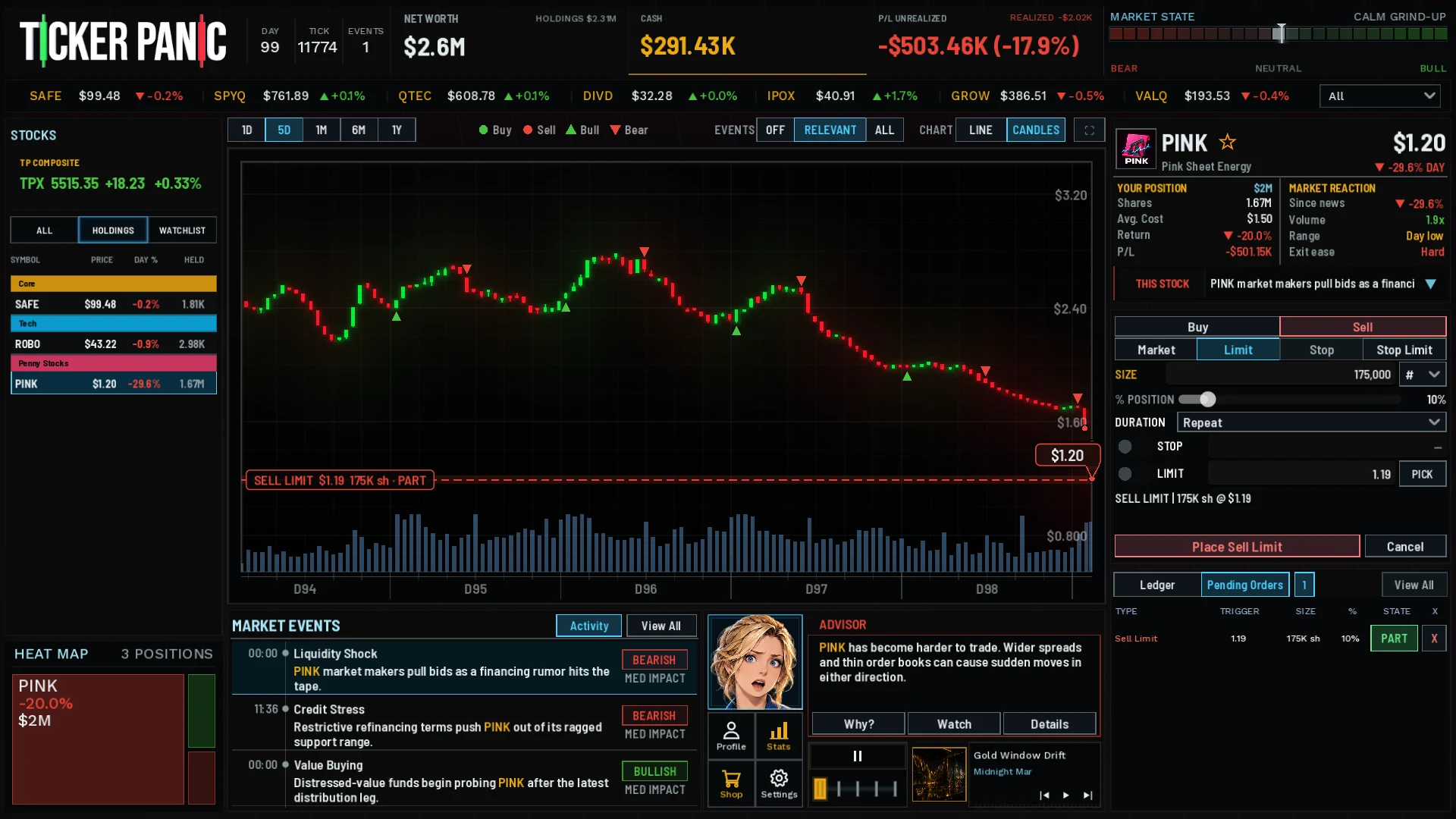
PINK's screenshot shows a partial repeating sell. Shares remain even though a sale is in progress, and that remaining holding still participates in later price movement.
Before another order, inspect the ledger, pending orders and position. Repeated clicking without reading these views makes it harder to distinguish what completed from what is waiting. The goal is understanding the state you actually have.
Plan around the market you have
Position size, entry and exit are related decisions. An asset manageable for a small account can become awkward when you concentrate a larger account in it. Liquidity is not just a problem to discover after the price falls.
A staged plan can be easier to inspect than one oversized action, but still depends on the market. A limit expresses a price condition; it does not create counterparties. A repeating instruction is not proof every repetition will fill.
- Read depth before committing a large order.
- Compare fills with intended quantity.
- Check holdings after a partial sale.
- Revisit the plan when the story or available demand changes.